The Story Behind The Care
By Colleen MahAt the beginning of January 2012, my mother took the oxygen tube out from under her nose and decided she was done.
She had been living with cancer for more than twenty years, a lump in her breast in the late 1980s, and a return thirteen years later as a tumour pressing against the phrenic nerve in her chest. She knew something was wrong when she couldn't catch her breath. What followed was more than a decade of treatments, of carrying the emotional weight of metastasis as it moved to her bones, her brain, and eventually reduced her voice to a whisper. Through all of it, she did her own care. She bathed herself. She was not incontinent. She did not languish. Our family had many open and honest conversations about the fact that she was dying, and her request was always the same; she wanted to remain at home. She wanted to die there.
We were assigned a community nurse. But we didn't fully understand what having a home death would actually require.
She grew increasingly frail over the holidays. Just a week into January, she went into respiratory distress on a Friday evening. My father tried to reach me, but my phone was silenced. He called my sister. Together they contacted the nurse, who had no equipment or medications on hand to ease her suffering. They called 911.
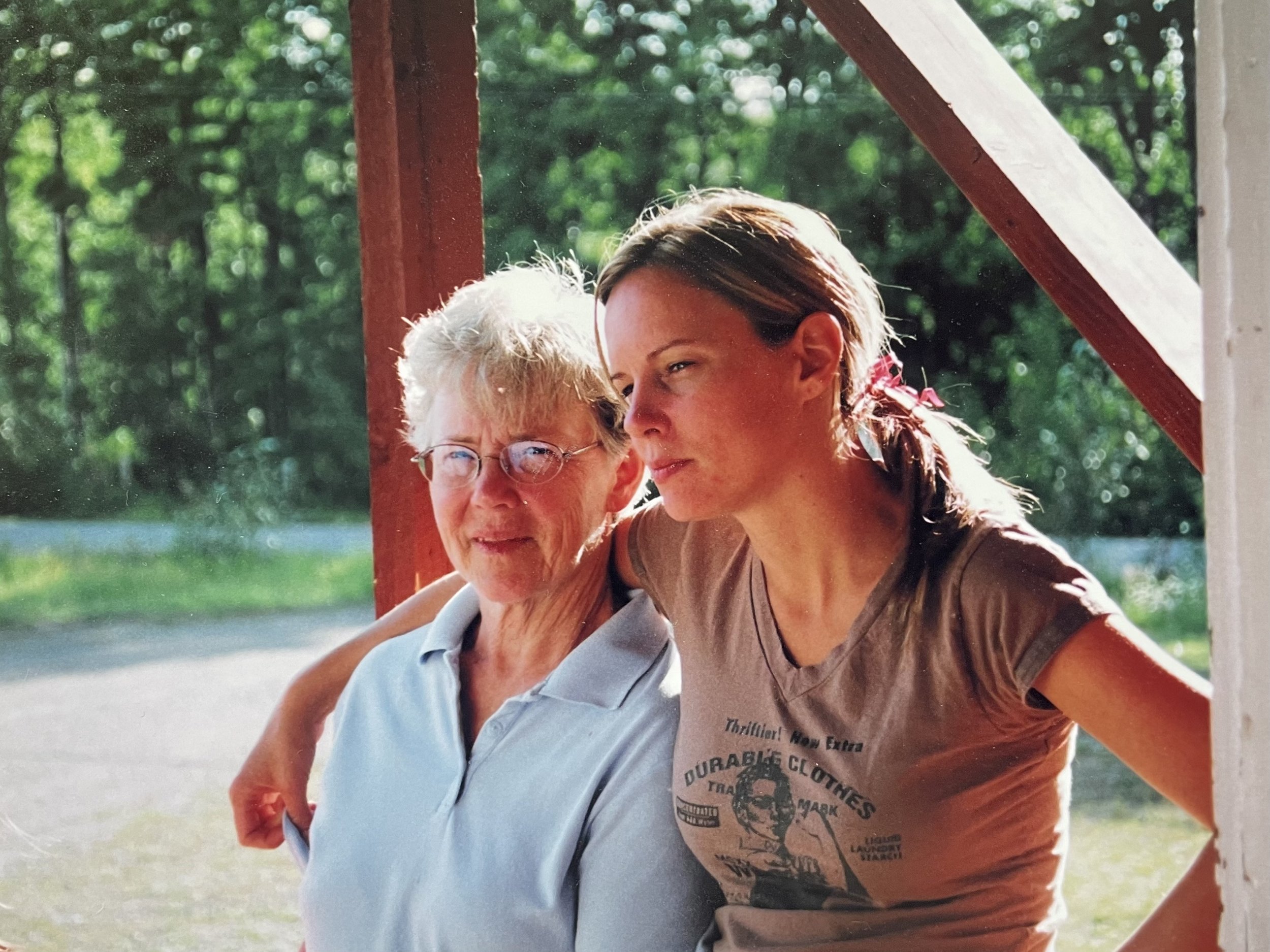
By the time I reached the hospital, my mother had been pushed against a wall in the hallway of the emergency department. It took twelve hours of advocating to move her to a shared room in oncology. She asked repeatedly to be taken home. None of us knew how to make that happen.
She thrashed uncomfortably in her hospital bed until Sunday night, when she reached up and removed the oxygen tube from under her nose. Her chest rose and fell intermittently. We waited. Both wanting it to be over and devastated to know that life would never be the same.
When we left her body behind that night, we carried the grief, and the regret of not having fulfilled her wish.
The long path toward understanding
Eight years later, in January 2020, I was let go from my job in sales at a technology startup. It was a blow I hadn't seen coming, and it sent me down a long path of self-discovery. I knew I wanted something more purposeful, something in service to others.
At first, I focused on people who wanted to die at home. I took courses in end-of-life doula work and grief counselling. I signed up to volunteer at a local hospice. Through that process, I discovered that in the years since my mother's death, the public system had become considerably more capable of supporting home hospice. I also came to a quieter realization; my mother's time actively dying had been relatively brief. She hadn't required a long stay in hospital or a care facility. She had done her own care right up until that Friday night.
Mercifully, I also learned that even people who are actively dying in their own physical home still repeatedly ask to go home.
What I came to understand is that the healthcare system has many levers to pull in the final weeks before death, but leaves significant gaps in the space between when a person's health begins to fail and when they eventually pass away. In some cases, that space spans years.
This became undeniable when a close friend's father was in the final stages of brain cancer. He wanted to remain at home. He was prone to restlessness and falling. Her mother grew exhausted. The family looked into overnight care and discovered that public home support doesn't cover it, and private pay companies were costly over the long term. Luckily, they had the resources to pay, but they were deeply uncomfortable knowing that the women being sent to
their door, mostly marginalized and immigrant, were earning a fraction of what the agency charged.
That discomfort stayed with me.
The Decision
In the spring of 2023, I decided to become a care aide. I had explored coaching, social work, and navigation services, as a way to help families build a plan for chronic illness and end-of-life care. But I kept returning to the same problem; there were no care options I felt comfortable recommending. The public system is a good place to start, but it's often inflexible and unpredictable. Private pay companies require three to four hour minimum visits that don't fit what most families actually need. Hiring privately puts families in the position of managing staffing, scheduling, and administration on their own. Becoming a care aide was the most honest next step. It gave me the clearest possible view of the system from the inside.
Since completing my training, I've spent three years working as a Community Care Worker, in people's homes and in facility care. I've sat with families navigating impossible decisions. I've watched caregivers do extraordinary work for wages that don't reflect their skill or their worth. I've seen what happens when care is reduced to a task list, and whatbecomes possible when it isn't.
Our Intention
Woven Integrative Home Care is a culmination of what I want for my community, for families like mine, and for myself one day.
We are a BC Benefit Company, incorporated in North Vancouver. Our commitment to the people we serve, and the people who do the serving, is part of our founding purpose. Because care shouldn't be about profit margins
and investor returns. It should be a symbiotic relationship, where the people who are called to care work, and the people who have reached the stage in life where they need help, both matter equally.
